Day 2
Oxford landmarks morning run
Stay active during the conference and discover some of Oxford's most iconic landmarks by joining us on an easy morning run. We will be starting the run promptly at 7am outside the Radcliffe Camera, in the very heart of Oxford.

Andreea Anastasiu
University of Oxford

Dr Jonathan Davies
University of Oxford
Registration opens
In-person participants will be able to register at the reception of the Blavatnik School of Government building before joining our Croissants and Collaborations for tea, coffee and pastries with other in-person attendees and speakers.
Regulatory frameworks for outcomes-focused partnerships
Back by popular demand and now officially part of the main programme, these sessions will last 90 minutes, and are designed to connect experts around a specific challenge or question that they can solve (or seek to make progress on) together. With croissants in hand, participants are invited to contribute their expertise and ideas in a relaxed, conversational setting.
Attendees should come ready to join together in this session to discuss how we can build regulatory frameworks for outcomes-focused partnerships.

David Hunter
Global Alliance of Impact Lawyers

Siegrid Holler
Instiglio
Nurturing social outcomes markets
As outcomes become tradable, how do we build systems that ensure trust, legitimacy and a market-based mechanism that truly drives human and societal flourishing? This session brings together leading voices to explore the future of verified outcomes, from the risks and tensions to the opportunities for scale. Join us for a grounded conversation on what it will take to move from bespoke contracts to an outcomes marketplace.
- With public funding stretched, corporates under pressure, and philanthropy seeking increased accountability and effectiveness, the time is ripe to rethink how we connect verified impact to capital.
- Building on emerging frameworks like the World Economic Forum’s tradeable impact initiative, and early infrastructure and standards being tested by pioneers like Common Good Marketplace and WOCAN’s W+ credits, this session explores what’s needed for real adoption.
- Expect a provocative, participatory format designed to surface real tensions and leave participants with a clearer understanding of how they can engage with — and help shape — the future of verified outcomes.

Cooper Renfro
Social Finance

Matheus Chacur
Common Good Marketplace
Making theoretical savings real: The case for building preventative spending into budget rules
Back by popular demand and now officially part of the main programme, these sessions will last 90 minutes, and are designed to connect experts around a specific challenge or question that they can solve (or seek to make progress on) together. With croissants in hand, participants are invited to contribute their expertise and ideas in a relaxed, conversational setting.
Attendees should come ready to join together in this session to discuss how we can build preventative spending into budget rules and how to take more preventative approaches.
Dr Cressida Gaukroger
Independent researcher

Dr Elaine De Gruyter
University of Oxford

Bruno Schettini
São Paulo Securitization Company

Jeffrey Matsu
CIPFA
How can we create a health system with a focus on outcomes?
Back by popular demand and now officially part of the main programme, these sessions will last 90 minutes, and are designed to connect experts around a specific challenge or question that they can solve (or seek to make progress on) together. With croissants in hand, participants are invited to contribute their expertise and ideas in a relaxed, conversational setting.
Attendees should come ready to join together in this session to discuss how we can create a health system with a focus on outcomes.

Ruben Koekoek
Social Finance NL

Jake Segal
Social Finance
Connecting the local with impact at scale
Back by popular demand and now officially part of the main programme, these sessions will last 90 minutes, and are designed to connect experts around a specific challenge or question that they can solve (or seek to make progress on) together. With croissants in hand, participants are invited to contribute their expertise and ideas in a relaxed, conversational setting.
Attendees should come ready to join together in this session to discuss how we can help better connect the local with impact at scale.

Dr Benedetta Trivellato
University of Milano-Bicocca
Ian Morris
Peterlee Town Council

Jessica Reedy
University of Oxford

Sanjana Haribhakti
British Asian Trust

Miléna Castellnou
Education Outcomes Fund

Dr. Pratibha Narayanan
Involve Learning Solutions Foundation
From learning to legacy: Practical lessons from UK outcomes funds
Back by popular demand and now officially part of the main programme, these sessions will last 90 minutes, and are designed to connect experts around a specific challenge or question that they can solve (or seek to make progress on) together. With croissants in hand, participants are invited to contribute their expertise and ideas in a relaxed, conversational setting.
This session is perfect for anyone working in or with social outcomes partnerships who wants to explore how learning from the Life Chances Fund is influencing new programmes and systems, share experiences from their own work, and tackle the challenges of making outcomes-based approaches stick.
Dr Jonathan Davies
University of Oxford

Maria Patouna
University of Oxford

Freddie O'Farrell
AllChild

Sarah Cooke
Bridges Outcomes Partnerships

Iciar Ania
Bridges Outcomes Partnerships

Sangita Patel
Substance

Madeline Goldie
Social Finance
Outcomes funds 2.0
Back by popular demand and now officially part of the main programme, these sessions will last 90 minutes, and are designed to connect experts around a specific challenge or question that they can solve (or seek to make progress on) together. With croissants in hand, participants are invited to contribute their expertise and ideas in a relaxed, conversational setting.
This peer-learning session is particularly for those who have been involved in running an outcomes funds. Attendees should come ready to share their experiences and learn from one another.
Andreea Anastasiu
University of Oxford

Can Atacik
Alethina Impact

Stephen Chandler
Education Outcomes Fund
Croissant, Code & Contracts: Using AI Responsibly for Social Outcomes
Join this session if you're looking for fresh ideas (and croissants) on how AI can improve public services without losing public trust. The conversation will touch on using AI to automate cost data classification to support real-time learning, on gaining insights from conversational service user feedback using AI and on the risks of AI in public procurement and how contracting frameworks can support responsible adoption

Paul Atfield
EOF

Damien Ribbans
Transceve / Noise Solution

Saema Jaffer
UK Parliament

Dr Felix-Anselm van Lier
University of Oxford
Chair
Big Picture: Impact economy - the what, the how, and the why
With governments, investors, and communities grappling with how to deliver better outcomes in a time of mounting social, economic, and environmental pressure, the concept of an impact economy is no longer a fringe concept—it's fast becoming a policy and investment imperative. But amidst the buzz, there's still a need for clarity and coherence: What exactly do we mean by the impact economy? How can it be built in practice, not just in theory? And why does it matter now more than ever?
This Big Picture session brings together senior policymakers, sector leaders, and cutting-edge academics to unpack the what, how, and why of the impact economy — from mobilising private capital for public good, to embedding accountability and evidence in decision-making. Featuring senior voices from government, academia, and the frontlines of delivery, expect bold ideas, international perspectives, and a candid conversation about what it takes to shift systems towards impact at scale.
Opening Keynote
We will be joined by Ruth Hannant, Director General for Policy at the Department for Culture, Media and Sport (UK Government) who will give an opening keynote to start the session. Building on the Prime Minister's recent "Delivering Change Together" Summit in July, Ruth will set out how her department is working closely in partnership with the Impact Economy to deliver on the UK government's priority missions.
Find a recording of the event here.

Sooinn Lee
Enuma Inc.
Jessica Reedy
University of Oxford

Michiru Toda
Japan Social Innovation and Investment Foundation

Dr Gorgi Krlev
ESCP Business School
Ruth Hannant
Department for Culture, Media and Sport

Dr Chih Hoong Sin
Independent
Chair
Big Picture: From metrics to meaning - rethinking data infrastructure for adaptive public service
Delivering effective public services in complex environments requires collaboration across government, service providers, intermediaries, and philanthropy. Yet, traditional data systems—built to monitor performance through fixed outcomes and linear theories of change— fall short in capturing some key drivers of impact: trust, relationships, and adaptive local responses.
This panel will explore how we can reimagine data infrastructure to better support test-and-learn approaches in the design and implementation of social programs. We will discuss limitations of existing data infrastructures but also remain pragmatic to what can be done at every level of programs to generate learning from data on complex services.
Find a recording of the event here.

Dr Nevilene Slingers
South African Medical Research Council (SAMRC)
Dr Felix-Anselm van Lier
University of Oxford

Stephen Aldridge CB
Ministry of Housing, Communities and Local Government

Prof Rob Wilson
Manchester Metropolitan University
Dr Mara Airoldi
University of Oxford
Chair
Social impact poster gallery
We recognise that there is so much exciting and meaningful work all of our different speakers and their organisations are doing which can’t be fit into the limited speaking slots.
As such, we are excited to host this opportunity at the Social Outcomes Conference 2025. Speakers and organisations are invited to share posters at the conference which are on display virtually here SOC25 Social Impact Poster Gallery and a selected few physically in the Inamori Forum at the Blavatnik School. This way both online and in-person participants can view the valuable social impact work and research that has been done.
Session documents:
Check out the Posters from the SOC25 Social Impact Poster Gallery!Deep Dive: Scaling Results-Based Financing in maternal health: Lessons from Zimbabwe and South Africa
This session explores how results-based financing (RBF) can be institutionalised and scaled to improve maternal health outcomes in complex, resource-constrained settings. Drawing on two rich case studies—from Zimbabwe’s national rollout of RBF in reproductive, maternal, newborn, child, and adolescent health, to South Africa’s innovative integration of mental health into maternal care pathways in rural Limpopo—the session provides concrete insights into designing, implementing, and sustaining outcome-based approaches. Presenters will share lessons on building local ownership, aligning funding and verification systems, and co-producing outcomes with communities. The session will conclude with a panel discussion featuring implementing partners and policy experts, reflecting on the enabling conditions and challenges for embedding RBF into national health systems.
Find a recording of the event here.
Presentations
The World Bank (WB) introduced Results Based Financing (RBF) in Zimbabwe's Health sector in 2011, with Cordaid Zimbabwe as the Implementing Entity. RBF started with a six-month pilot in two …

Inge Barmentlo
Cordaid

Trish Fadzai Mukunyadzi
Cordaid
Mothers in rural peri-mining communities of Limpopo, South Africa struggle with their mental health. There are high rates of depression, teenage pregnancy and new HIV infections, with many women only …

Stacey Ann Pillay
The Healthy Brains Global Initiative

Imke Engelbrecht
Right to Care NPC
A key policy priority worldwide is the development of resilient health systems to withstand future pandemics and other public health emergencies. Identifying policy levers with the potential to build resilience …

Stefanie Tan
University of Toronto
Chair:

Emily Hulse
University of Oxford
Chair
Deep Dive: Where next for international development and humanitarian aid?
Cuts to foreign aid budgets by major donor-countries have thrown development and humanitarian work into crisis. Organisations across the sector face a challenge: using fewer resources to meet the needs of vulnerable populations, all while global fragility remains at a record high. This session will reflect on the future of development and humanitarianism, with particular consideration of highly fragile contexts. We will draw from emerging evidence on alternative strategies and funding models to indicate how partnerships might support better social outcomes in fragile settings. Key themes include: accountability and efficient spending; the role of local organisations; translating investments into long-term sustainability of impact.
Find a recording of the event here.
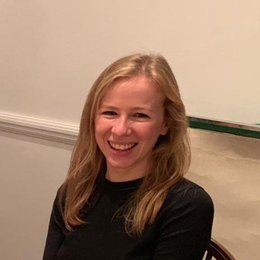
Jemima Hodkinson
FCDO

Dr Harry Bregazzi
University of Oxford
Chair
Presentations
This paper explores the application of outcomes-based financing in fragile and conflict-affected regions, using Palestine as a case study. Specifically, it examines the first Development Impact Bond (DIB) implemented in …

Marcelo Marzouka
Sunbird Finance & Invest Palestine: Impact Advisors
The Syrian civil war, which began in 2011, generated the world's largest refugee crisis since the Second World War, with Jordan eventually hosting more than 600,000 Syrian refugees. The protracted …

Dr. Evan Borkum
Mathematica
Strengthening local capacity in fragile and conflict-affected contexts is central to the sustainability of interventions aimed at preventing violent extremism (PVE). Local capacity strengthening is not only complementary but integral …

Samhita Ayaluri
Global Community Engagement and Resilience Fund (GCERF)
Deep Dive: Building Blocks – Data and Outcomes in Education Systems
Innovative financing and strategic data use are reshaping the future of foundational learning and education. This deep dive convenes system‑builders from India, South Africa and Latin America to show how an outcomes focus powered by smart data and adaptive evaluation can move the needle at scale. Leading practitioners, researchers and funders will unpack how systems can move from intent to impact. Drawing on experience from diverse contexts, our panel will explore contracts and funding models that tie payments to measurable outcomes while keeping equity and quality at the centre. How can we turn data into decisions and streamline the flood of classroom and system‑level information? How can we evaluate complex change with new flexible and responsive frameworks?
The panel will surface what it takes to unlock political will, design contracts that reward results, embed data in everyday decisions, and scale interventions without losing sight of context. Participants will benefit from sharp lessons, candid reflection and practical take‑aways for anyone committed to better foundational learning, whether you write policy, finance programmes or work on the front line of education outcomes.
Find a recording of the event here.

Dr Rachel Hinton
FCDO
Dr Mara Airoldi
University of Oxford
Chair
Presentations
While outcomes-based financing (OBF) has gained traction in education over the past decade, there have been limited OBF programmes in early childhood care and education (ECCE).
In 2025-26, the Education …
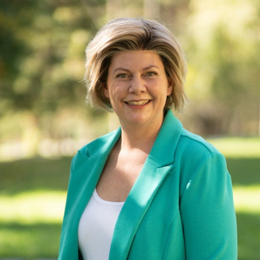
Louise Albertyn
EOF
In states like Uttar Pradesh, India, millions of data points are collected daily, tracking everything from classroom instruction to district-level learning outcomes. As part of India's national NIPUN Bharat Mission, …

Dr Dhir Jhingran
LLF
Strengthening education systems, particularly in contexts of partial decentralization and persistent low-quality results, presents a complex challenge. This presentation explores an innovative ex-post evaluation of the Dominican Republic's education system, …

Maria Florencia Guerzovich
Grupo Politeria
Deep Dive: Reimagining employment support through outcomes-based employment initiatives and relational practice
How can employment services better support those furthest from the labour market into stable, welfare-enhancing and sustainable work? This session brings together diverse international case studies – from England, Australia, and South Africa – that challenge the conventional placement-driven systems and instead spotlight more relational, person-centred and capability-enhancing models of employment support.
Presentations will explore how local partnerships are embedding systems thinking and co-production into youth employment initiatives; how pay-for-performance and outcomes funds are fostering innovation and better coordination between government, training providers, and employers; and how flexible, personalised support models can deliver improved labour market outcomes for disadvantaged groups.
Together, these examples show how employment interventions that focus not just on rapid job placement but on wellbeing, confidence, and longer-term job sustainability can more effectively meet the complex needs of individuals. The session will also share new quantitative evidence on what works, highlighting the potential of outcomes-based funding mechanisms to deliver better results, both for service users and for improving value for money in public service delivery.
Find a recording of the event here.

Professor Mark Considine
University of Melbourne

Dr Eleanor Carter
University of Oxford
Chair
Presentations
Welfare-to-work programmes in Australia have for a long-time been structured around a 'work-first' activation model delivered by networks of organisations competing for clients, government contracts, and market share. For over …

Dr Michael McGann
University of Melbourne
Rates of youth unemployment across sub-Sharan Africa range from high single digits to above 50%. Despite often-significant spending on schooling and post-school skills and training by governments, research is showing …

Dr Stuart Theobald
Krutham
The Life Chances Fund (LCF) is the UK’s largest outcomes fund (£70m), launched by the Department for Culture, Media and Sport to address complex social problems through locally commissioned Social …
Dr Elaine De Gruyter
University of Oxford
Maria Patouna
University of Oxford
Almost one-in-eight young people in the UK aged 16 to 24 are not in education, employment, or training. As of May 2025, the figure stood at 923,000 (ONS, 2025), with …

Tanyah Hameed
Social Finance
Big Picture: Contracting for Public Value
Delivering public value—what is good for and valued by the public—is the ultimate goal of cross-sector partnerships involving government. However, public value is no one thing – it is complex and multi-faceted. Different public values must be weighed up against one another, and public servants must take decisions as to which are the most important amidst competing interests, financial constraints and fast-moving, complex projects. In this session, we’ll explore what public value is, how different dimensions of public value emerge in different policy domains, and ultimately, how public-private partnerships can effectively deliver public value in complex projects.
We’ll explore a wide conception of public value, including the need to be efficient at a time of constrained public finances, and the need to take a whole-society approach to defence, as emphasised by the war in Ukraine, as a very minimal requirement for the security necessary to deliver other social outcomes. How do we prioritise among these different objectives, both as a society, and on the ground in particular projects, particular when the pathways to our overarching goals are unclear and difficult to measure?
We’ll then dig into the challenges of governing this delivery of public value in the context of cross-sector partnerships, where public, private and third sector organisations need to be brought together under a shared sense of public value. How do we align different incentives and institutional logics in order to capitalise on the unique assets different parties bring to the delivery of public value?
Find a recording of the event here.
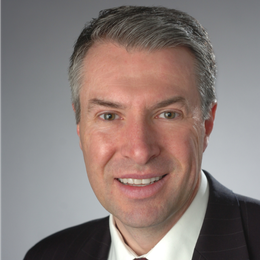
Professor David Van Slyke
Maxwell School of Citizenship and Public Affairs, Syracuse University

Stephen Muers
Better Society Capital

Michael Gibson
University of Oxford
Chair
Book launch: Contracting for Public Value
In this session, over drinks in the Inamori Forum, we’ll discuss insights from a new book comparing insights from cases in the UK and US on striking the balance between the formal and relational elements of contracts in social services.
Find a recording of the event here.

Professor Carolyn Heinrich
Vanderbilt University

Deanna Malatesta
Indiana University
Dr Eleanor Carter
University of Oxford
Michael Gibson
University of Oxford

Nigel Ball
Social Purpose Lab

Pepper Culpepper
University of Oxford
Chair
SOC25 Closing celebration gala & remarks
A celebratory ending and closing remarks with moments of community, insights, and connection. Join us for drinks, nibbles, music, and reflections for this final celebration in our beautiful venue.
Enter access code
Submit the event access code to reveal the session/meeting credentials.