Equity by Design in Outcomes-Based Financing for Early Childhood Care and Education
Across many countries, outcomes-based financing (OBF) is being explored as a mechanism to improve accountability and results in early childhood care and education (ECCE). Yet as interest in OBF grows, so too does a more uncomfortable question: what happens to equity when funding is tied to measurable outcomes?
Across many countries, outcomes-based financing (OBF) is being explored as a mechanism to improve accountability and results in early childhood care and education (ECCE). Yet as interest in OBF grows, so too does a more uncomfortable question: what happens to equity when funding is tied to measurable outcomes?
In this webinar, convened under the Collective Learning Initiative (CLI) by the GO Lab, NORRAG, and the Education Outcomes Fund (EOF), speakers from government, research, and practice came together to explore this question. The discussion moved from big-picture ideas, to financing systems, and finally to real-world examples from Rwanda and Thailand.
Rather than treating inclusion as a technical safeguard, the session returned to one central idea: equity is a design and governance choice.
Disability, inclusion, and outcomes
Ella Wright and Catherine Batamuriza opened the discussion with reflections from Rwanda, where they supported the design of an inclusive ECCE Outcomes Fund.
Catherine began by situating inclusion in lived experience. In many early childhood centres, she noted, classrooms are crowded and caregivers are stretched. Some children respond confidently. Others withdraw, become overwhelmed, or need more time and support. These children are not failing. Rather, the system around them is not always designed to recognise how they learn.
As she put it:
This becomes especially important in the context of OBF. These models tie payments to results that can be measured. Yet when measures are narrow or standardised, some children’s progress becomes harder to capture. This creates risk. Children whose learning is less visible to the system may be overlooked not because they are not learning, but because their development does not fit expected patterns.
In Rwanda, this challenge became clear early in the design process. The government wanted to strengthen disability inclusion. However, widely used tools such as the International Development and Early Learning Assessment (IDELA) and the Brief Early Childhood Quality Inventory (BEQI) were not designed to capture inclusion or relational aspects of development, such as how caregivers respond to children.
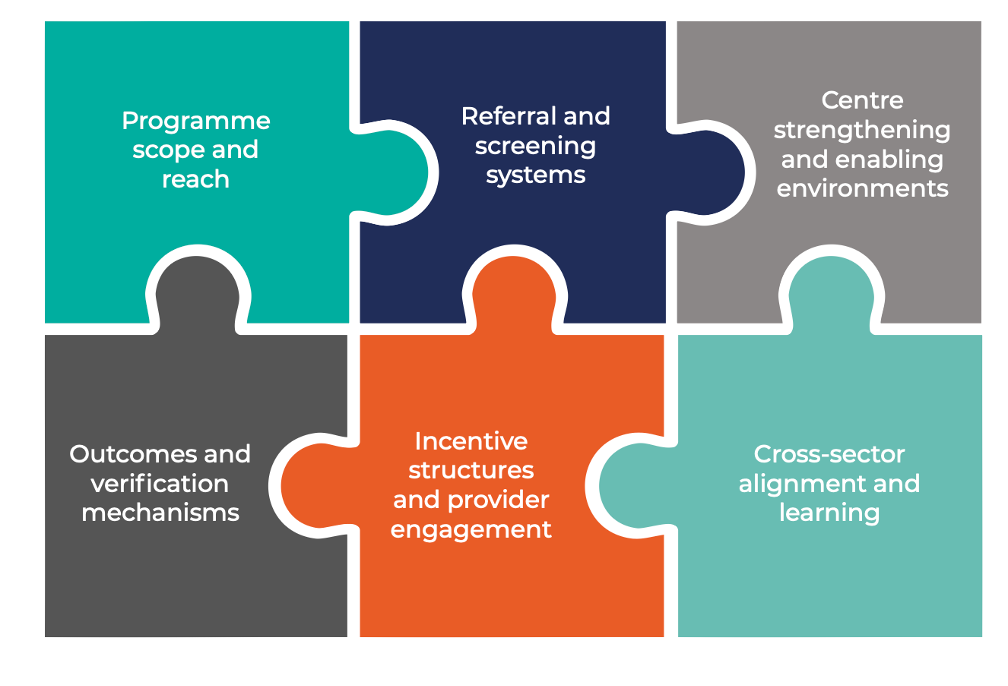
The design process required difficult trade-offs. Random sampling did not work well when children followed very different developmental paths. Tracking every child individually was not feasible. Instead, the team combined several approaches, including structured screening and higher payments for enrolling children with disabilities.
This also required a shift in perspective. Rather than focusing only on what a child cannot do, the team worked towards a social model of disability; one that looks at how environments can better support all children.
Ella reflected on how this changed their thinking in practice:
Financing systems
Dr Michelle Neuman then widened the lens to the broader financing of ECCE.
Innovative financing, including OBF, can catalyse reform. It can focus attention on results, generate data, and introduce new accountability structures. However, it does not replace the need for sustained public financing.
Michelle highlighted several persistent challenges:
- In many countries, there is still a gap between policy commitments and actual funding.
- Governments often allocate a small share of education budgets to the early years.
- Families continue to bear a significant share of costs.
- Data gaps make it difficult to plan effectively.
Michelle emphasised that financing choices shape who benefits from ECCE. In her words:
She outlined four strategies to advance equitable financing:
- Align financing with rights-based legal frameworks.
- Prioritise ECCE in education planning and budgets.
- Design public subsidies that effectively target vulnerable populations.
- Invest in stronger monitoring and data systems.
In this context, OBF can support reform by generating evidence and making spending more visible. However, it also carries risks. If outcomes are defined too narrowly, they may crowd out broader developmental goals. And if programmes take too long to design, children may miss out in the meantime.
The key is to ensure that learning from OBF is not confined to individual projects, but feeds into wider system reform.
Thailand’s experience
Siree Jongdee provided a detailed account of Thailand’s Equitable Education Fund (EEF), an independent public agency established to reduce educational inequities.
EEF piloted an outcomes-based financing model to scale an early childhood intervention. The programme combined private upfront financing with outcome-based payments, and brought together government, service providers, and evaluators. It focused on disadvantaged regions and aimed to improve both access and quality.
Several design choices reflected this focus. Centres were selected not only based on readiness, but also on disadvantage. Health services were integrated into the model. And evaluation included both quantitative and qualitative data, capturing changes that went beyond what was linked to payments.
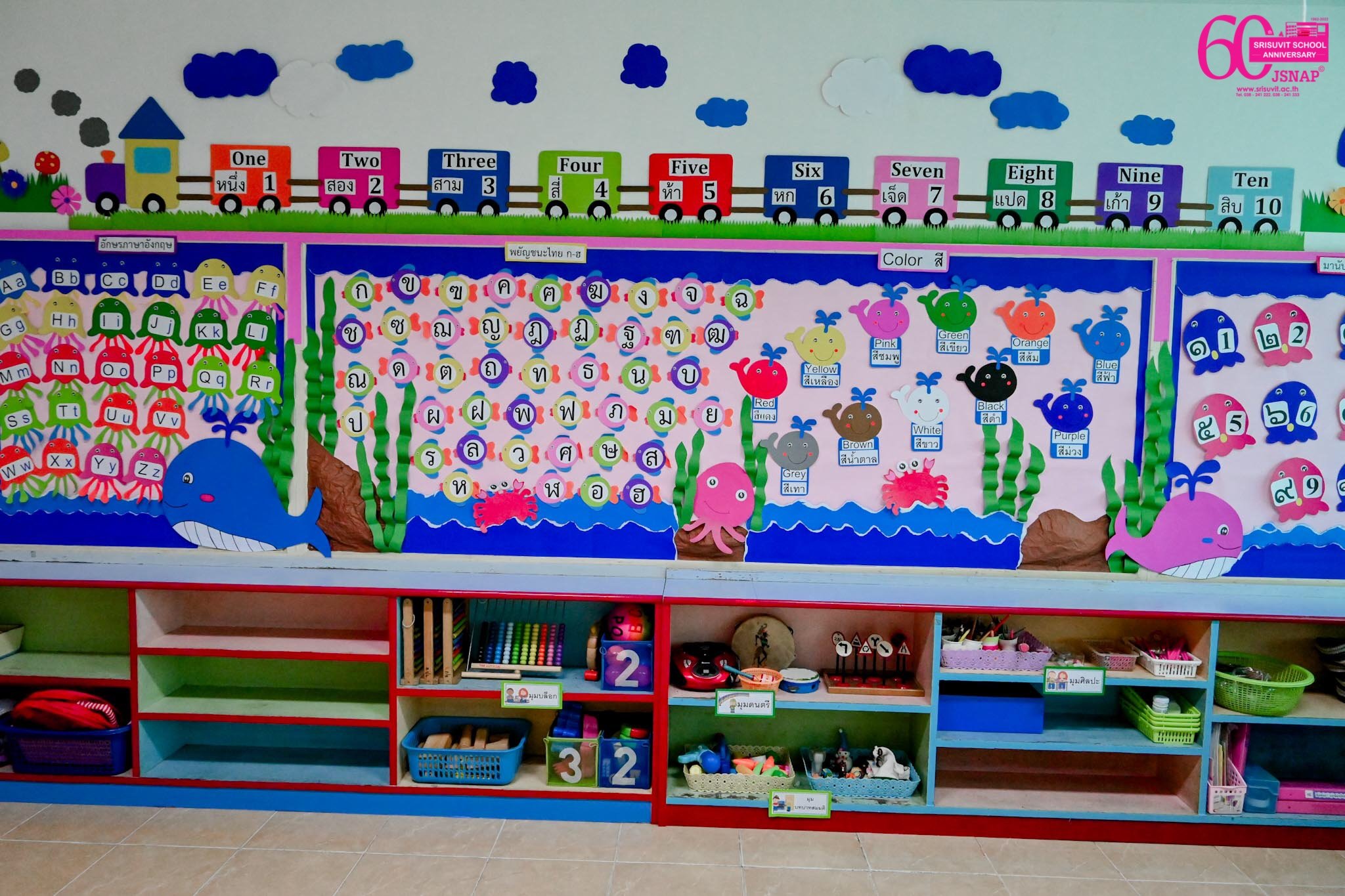
The intervention itself involved classroom redesign, teaching tools, training, and ongoing support.
Challenges emerged along the way. Lower-than-expected enrolment required adjustments. Some measurement tools were difficult to apply. And balancing equity with practical constraints, such as whether centres were ready to participate, required careful judgement.
At the same time, the OBF approach created new forms of collaboration. Local authorities co-invested in improvements. Successful classrooms became demonstration sites, encouraging wider adoption.
Reflecting on the experience, Siree noted:
Trade-offs and sustainability
The wider discussion returned to the question of trade-offs.
Inclusion often requires flexible and tailored approaches. These are not always easy to measure or deliver at scale. In resource-constrained settings, this raises difficult questions about sustainability.
Speakers emphasised that these challenges cannot be avoided but they can be managed. Catherine highlighted the importance of working closely with communities, even when this takes time and resources. Without this, systems risk excluding the very children they are meant to serve. Michelle pointed to the need to demonstrate that early childhood investments are not just costs, but long-term gains.
And across the discussion, there was a shared recognition that decisions about outcomes, measurement, and incentives are not neutral. They reflect choices about what and who matters.
Equity as a governance choice
Across Rwanda, Thailand, and the broader financing discussion, a common insight emerged.
Equity in OBF cannot be assumed. It must be designed. It is embedded in outcome definitions, incentive structures, data systems, and partnership models. It depends on whose knowledge is valued: caregivers, disability organisations, community actors, and on how openly trade-offs are acknowledged.
OBF can support better coordination, learning, and accountability. It can surface system gaps and generate valuable evidence. But it does not automatically produce inclusion. Without deliberate choices, it may reinforce existing inequalities by rewarding what is easiest to measure.