Highlights from Day 2 of SOC26
Day 2 of SOC26 explored a wide range of topics, from prevention, procurement and employment support to health and social care, education and systems change, with a strong focus throughout on partnerships and achieving impact at scale.
Day 2 of SOC26 explored a wide range of topics, from prevention, procurement and employment support to health and social care, education and systems change, with a strong focus throughout on partnerships and achieving impact at scale.
Croissants and Collaborations
We started Day 2 with Croissants and Collaborations, bringing participants together for a series of early-morning discussions. Across the sessions, a recurring theme was how to make policy and delivery more joined-up, adaptive and grounded in implementation.
Discussions on employment support and procurement highlighted the importance of better integration, data-sharing and employer engagement. A session on the UK’s first relational property development agreement explored how trust, purpose and relationships between partners can be built into major projects, including the idea of due diligencing people and purpose rather than focusing only on investability.
The Relational Diagnostic session focused on designing policy with future implementation in mind, using systems mapping, personas and scenario planning to test assumptions and anticipate change. A key reflection was the need to ask, “What can you do today to be prepared for that change in the future?”, treating adaptability and future-readiness as core parts of policy design.
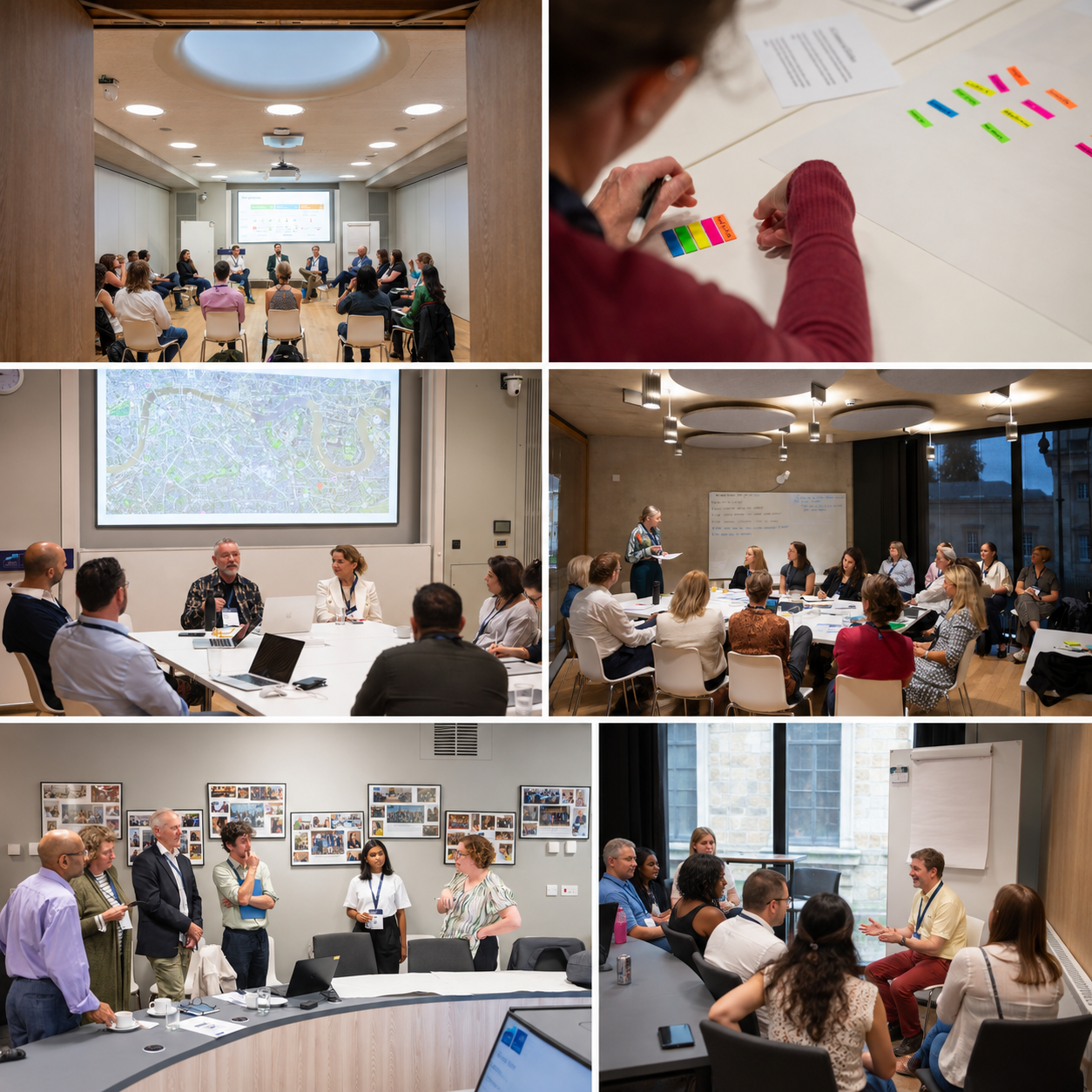
The education session compared different outcomes-based financing models, asking when they are most useful, which mechanisms are best suited to particular problems and where gaps remain.
In the discussion on primary prevention, a key reflection was that the challenge is not proving that prevention works, but creating the enduring institutions, incentives and trust needed to make prevention part of how government routinely operates – while keeping humanity and lived experience at the centre.
Finally, the public procurement and outcomes funding session considered the importance of adaptability within contracts and their governance with one procurement officer reflecting that “often, the successful contracts are the ones that have change mechanisms embedded in the governance structure.”
Roundtables and workshops
Our roundtables and workshops continued the conversation, exploring how outcomes-focused approaches can support transformation across public services and systems.
Using Outcomes Contracts for System Transformation in Health & Social Care: the Case of Neighbourhood Transformation Funds looked at how outcomes contracts can support greater integration across health systems, reduce health inequalities and shift the focus towards prevention and long-term outcomes. Participants from King’s College London, Social Finance and Macmillan Cancer Support explored how place-based investment and local anchor organisations can strengthen collaboration between the public and voluntary sectors and help reach underserved communities.
Beyond Compliance: How Can We Shift Social Procurement from Transactional to Transformational? explored what it would take to treat public procurement as an investment in social outcomes rather than simply money spent. Drawing on examples from the UK and globally, the discussion highlighted gaps in procurement data, the need to design measurement around providers as well as commissioners, and opportunities to embed intergenerational fairness and adaptability into procurement. Participants also considered practical barriers to change, from capacity and legal risk to political cover and permission to experiment.
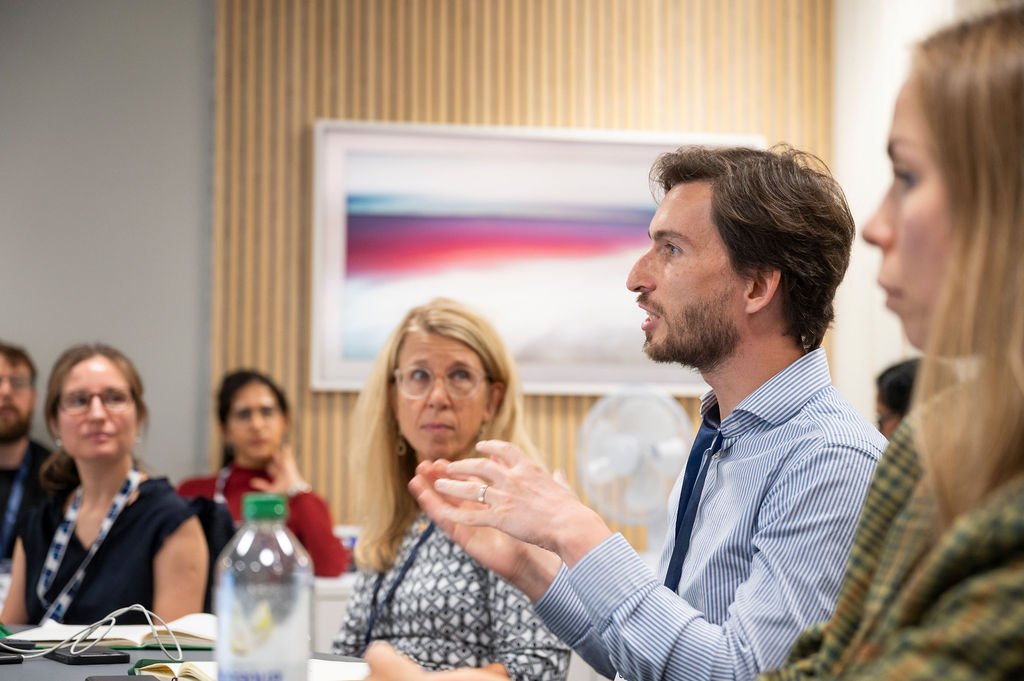
The governance of learning and growing: Are we designing systems that enable us to act on the evidence they produce? explored how evaluation can better inform decisions while there is still time to act. The discussion highlighted the need to design evaluation backwards from decision points and intended outcomes, balancing accountability and rigour with the flexibility needed for learning and innovation. Participants examined who holds decision-making power over evaluation, how to bridge evidence and human judgement, and how systems can enable programmes to “steer the plane in flight” rather than learning only after the fact.
From Test Kitchen to Public Systems: The Recipe(s) for Scalable and Accountable Cross-Sector Partnerships explored what it takes to move successful outcomes-oriented partnerships from experimentation to sustainable, system-wide impact. Drawing on examples from Colombia, South Africa, Kenya, the UK, the US and beyond, participants considered how governments, funders, intermediaries and service providers can build lasting collaboration. Discussions highlighted the importance of aligning incentives, strengthening government ownership, adapting to political and operational realities, and balancing accountability with the flexibility needed to innovate.
Social Impact Poster Gallery
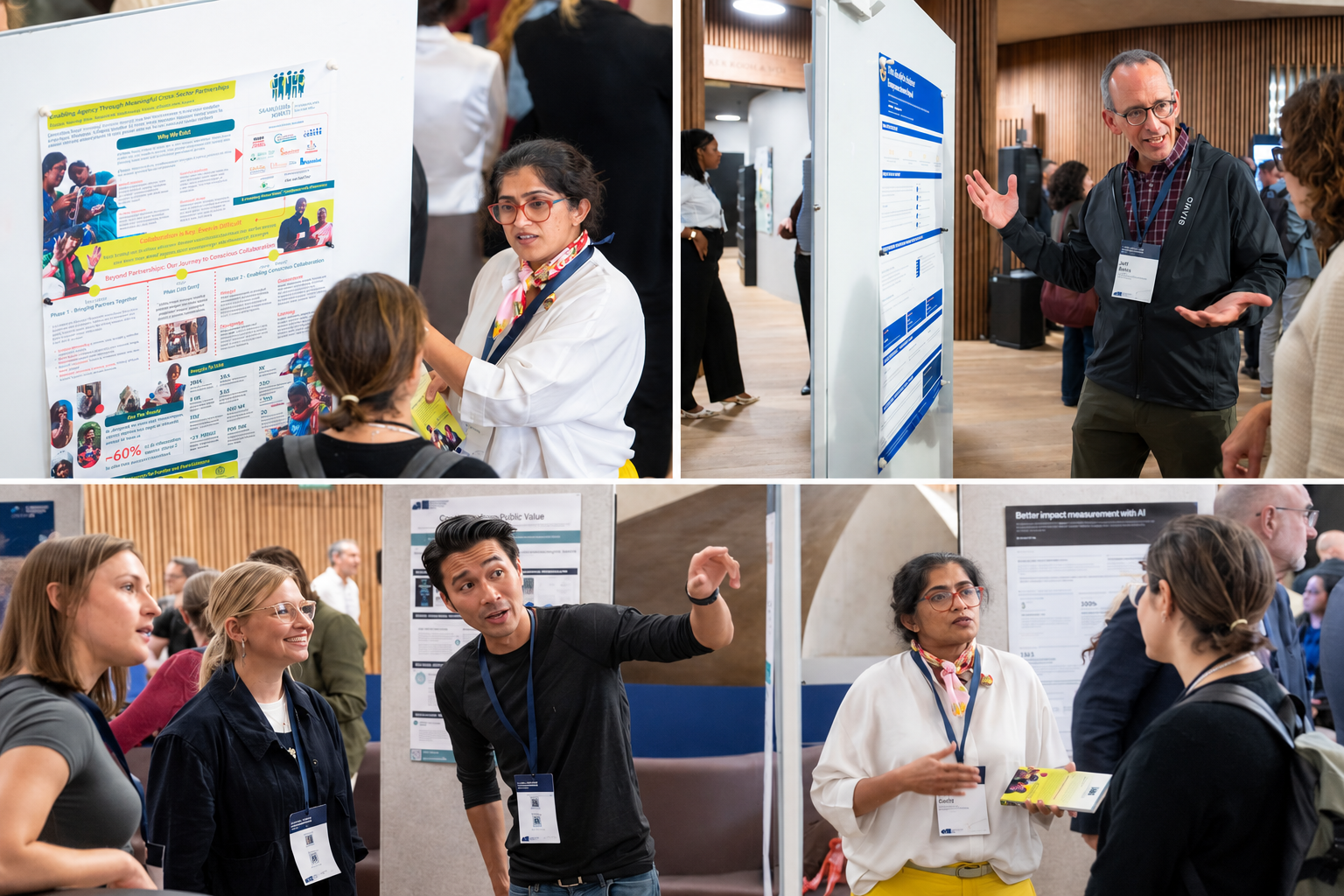
Over lunch, we hosted the Social Impact Poster Gallery, showcasing 16 posters on social outcomes-based work, research and projects from around the world.
The gallery offered participants another opportunity to discover new ideas and approaches, connect with work taking place across different sectors and geographies, and continue conversations from across the conference.
Deep dives
In the afternoon, our Deep Dive sessions brought participants together to explore some of the opportunities and challenges involved in achieving meaningful outcomes at scale.
The Strengthening Health Systems Through Outcomes-Oriented Partnerships Deep Dive explored some of the dilemmas involved in making outcomes-based approaches work in health systems. Speakers examined how outcomes-based funding can strengthen systems for lasting impact, how to align decision-makers and incentives, and how to balance rigorous evidence with faster, real-world learning. Discussions highlighted the trade-offs and practical choices involved in building partnerships capable of delivering sustainable health outcomes at scale.
The Innovating at scale in Early Childhood Care & Education Deep Dive looked at how innovative financing and cross-sector partnerships can strengthen services for young children and families, and what it takes to translate ambitious goals into meaningful outcomes, which can at times be challenging: “it's like building the aeroplane whilst your flying” - Palesa Nkabane
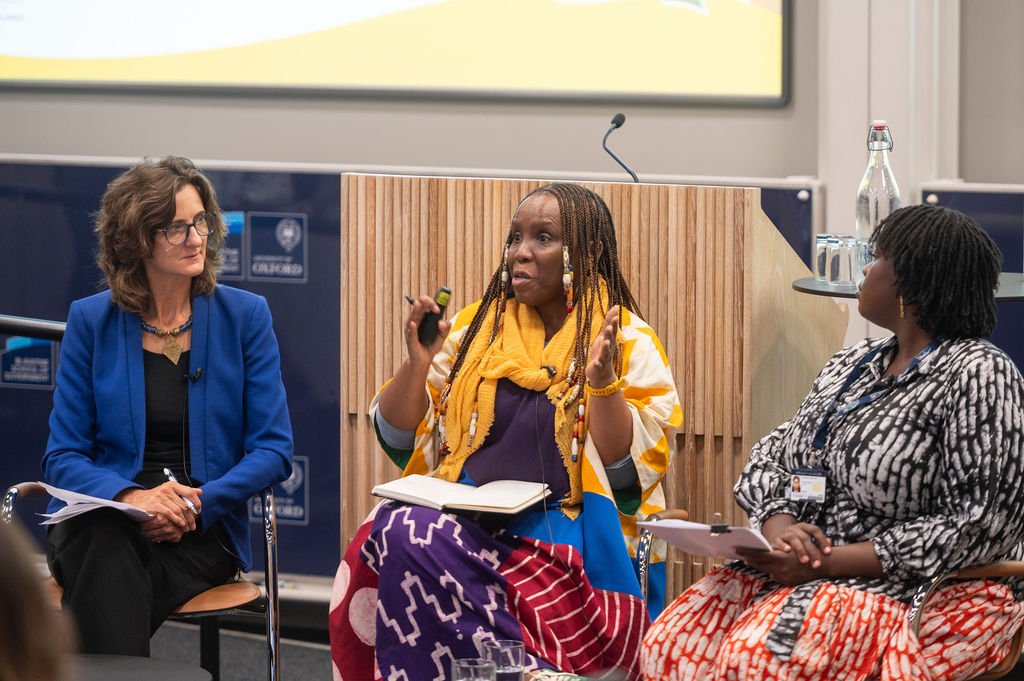
The Transforming care systems through person-centred approaches Deep Dive examined what it means to genuinely put people at the heart of services and decision-making. The conversation explored whether and how outcomes-based contracting and person-centred practice might reinforce each other, bringing perspectives from the UK and Australia.
The panellists concluded: “Outcomes-based contracting does not automatically create person-centred or relational practice. Those ways of working still need to be intentionally designed and sustained. What an outcomes model can do is create the right enabling conditions.”
The Power of Ecosystem Orchestration for Social Change at Scale Deep Dive looked at education systems in India and Brazil, exploring what it takes to turn ambitious policies into outcomes at scale. Panellists highlighted the role of NGOs in bridging policy and practice, bringing user voice into implementation, and navigating complex power dynamics. Key lessons included building trust, knowing when to push back, demonstrating results, and combining data with compelling stories to build support for change.
Big Picture
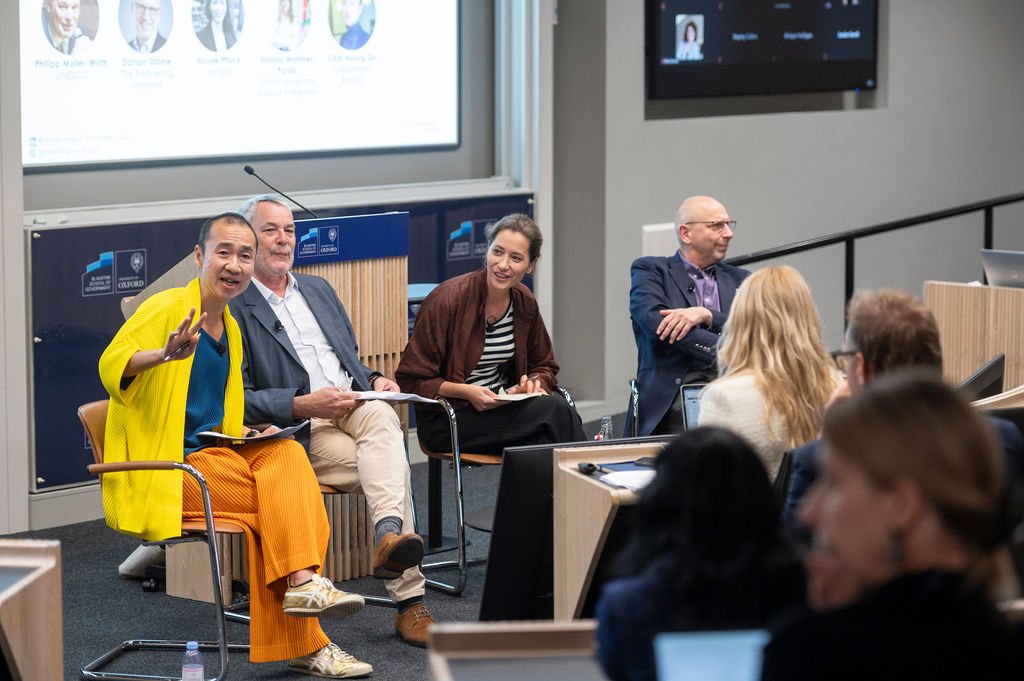
We closed SOC26 with our Big Picture session, which tackled the mundane messiness of partnerships for impact, bringing together perspectives from UNESCO, The Partnering Initiative, Instiglio and the District Secretariat of Social Integration, Colombia.
The discussion explored what it takes to make partnerships work at scale. Nicole reflected that in government reform, some of the hardest partnerships may actually be inside government itself. Philipp stressed that “you can’t have partnerships without shared values” – values we can no longer take for granted in an increasingly polarised world. Darian highlighted that building partnership skills is important, but needs to be backed by enabling institutions, funding and policies, while Natalia called on organisations to let go of “institutional ego” and focus on “institutional purpose”.
Chih Hoong left us with a memorable provocation: “invest in polygamy, not monogamy” – building broad, resilient networks rather than relying on a small number of relationships.